OpenFigs

OpenClaw, but for enterprise.

An army of agents
you can trust.

OpenFigs is the open skeleton for building back-office AI employees — plain files and prompts you read end to end. You clone it, you don't install it. A fleet of focused agents, not one opaque super-agent in the dark.

Runs onAnthropicClaude CodeOpenAICodexCursorCursorGoogle GeminiGemini CLI
~/my-fleet · click any file
AGENTS.md
markdown

The shared operating guide every agent inherits and composes on top of — the fleet-wide rules. The root is the topmost block; its rules flow down to every agent below.

# OpenFigs — operating guide
You are an AI employee: you own a job, do
it, learn from your work, and report to
your manager via Figs.

## How context composes — one folder = one agent
Your runtime reads the nearest AGENTS.md up
the tree, so every agent composes the root's
rules with its own — no wiring.
markdownscope: fleet-wideevery agent inherits it

01The problem

You can't trust
a black box.

OpenClaw proved the pattern — but a super-agent you install into the dark is a risk no business can sign off.

OpenClaw
one super-agent you install
OpenFigs
a fleet you clone
One agent does everything
One agent, one job
A hidden brain you install
Plain files you read
Wired into everything
One gateway per system
Unauditable — trust on faith
Audit every line
A new runtime to install
Runs on the agent you already use

02What it is

One folder is one AI employee

Every agent is a folder — its own guide, memory, and reports. Folders nest, so each inherits the fleet's rules and adds its own.

one folder = one agent
my-fleet/
·AGENTS.mdfleet rules — inherited by all
agents/
ledger/
·AGENTS.mdLedger's one job
Launch in ledger/ and it reads its own AGENTS.md + every one above it.

Composed automatically — the directory is the org, no wiring.

It keeps itself clean

A curated MEMORY.md it prunes as it learns, and a SANITY.md the self-audit skill checks on a schedule. The agent stays lean and maintainable on its own.

agents/ledger — maintains itself
MEMORY.mdworking memory
## Standing context
## Gotchas — what bites → workaround
rolls over when long → memory/2026-05.md
SANITY.mdself-audit · passing
every script has a purpose
MEMORY.md stays lean
docs index in sync

It logs itself, and delivers

It records every run, delivers each output as a rendered report, and raises an ask when it needs a human — all in its own .figs/ log.

agents/ledger/.figs — logs itself, delivers
runreconciled 1,204 transactions · March3:02p
reportdelivered close-2026-03.html3:02p
askapprove the $24k write-off?3:05p
runflagged a duplicate $4,200 invoice2:40p

Wired to Figs — natively

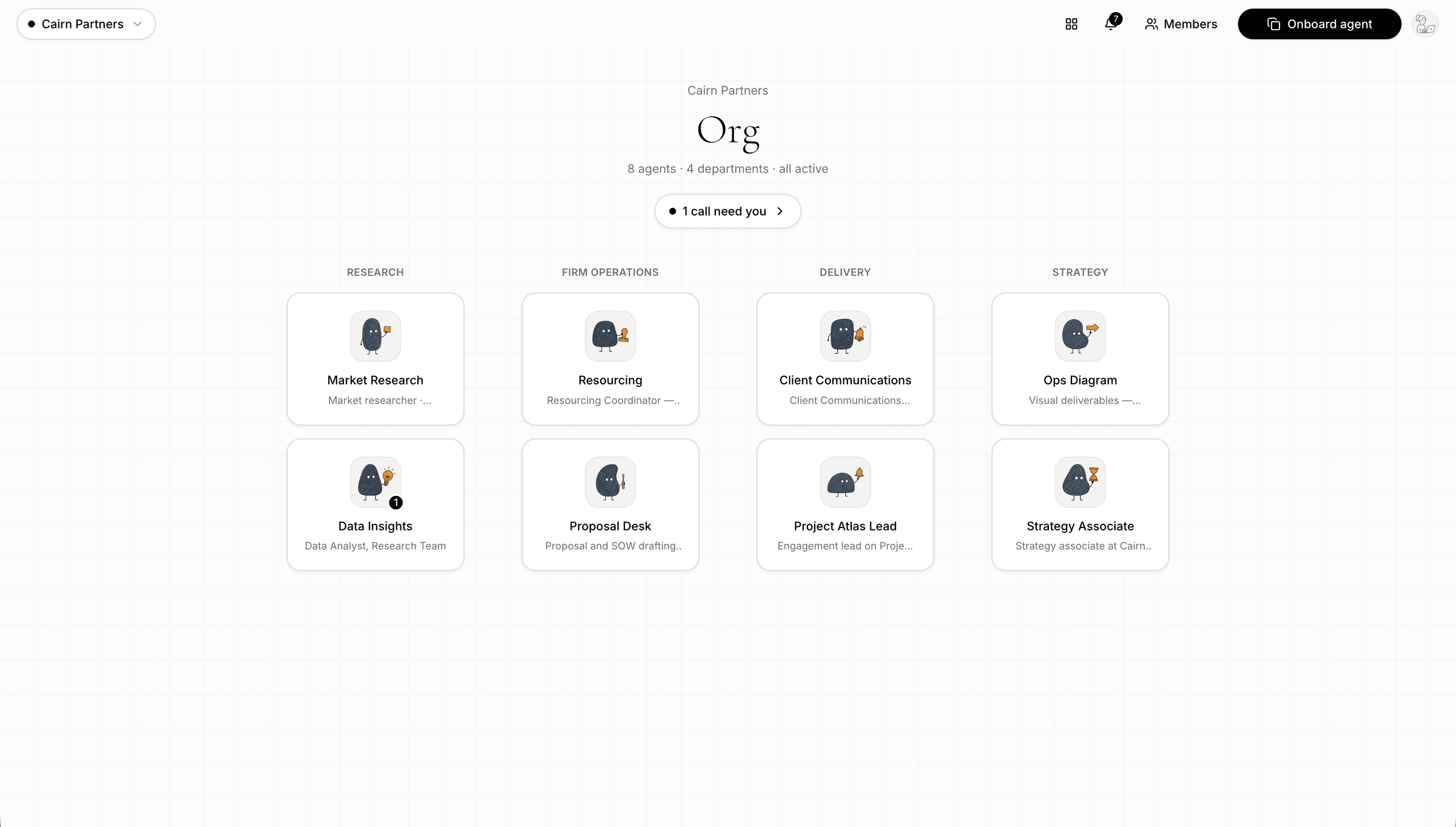
One figs push and your fleet appears in the Figs app as a live org chart — native to the skeleton, no glue code.

Explore a fleet in Figs
app.figs.so/demo — your fleet, governed
The Figs app org chart — an AI workforce grouped by department, each agent a card with a status dot and a 'calls need you' inbox. This is where an OpenFigs fleet shows up once it reports through .figs.

03The open stack

Build → report → govern.

Figs is one product in three open pieces. OpenFigs is where you build the fleet; agents report through the open .figs protocol; your team governs the whole workforce in the app. No piece locks you in.

Build
OpenFigsYou are here

The open skeleton for back-office AI employees — a fleet of focused agents you clone, not install. Runtime-agnostic, transparent, MIT. You're here.

Report
.figs

An open, MIT-licensed protocol your agents publish state through. One figs push and what they own, did, and need is live.

Read the spec
Govern
Figs

The org chart, the calls inbox, and the activity record your whole team sees. Where the fleet you built gets governed.

Open the app

04Trust

Nothing to install.
Nothing to distrust.

OpenFigs isn't software you run — it's a folder you copy and read end to end. Nothing's installed, nothing's hidden, so there's nothing to take on faith.

See the files yourself

FAQ

Questions & answers.

OpenFigs is basically a folder of files. Plain markdown like AGENTS.md and MEMORY.md, plus good-practice prompts already written for you, that turn Claude Code or Codex into an employee who owns a real job. Nothing fancy, nothing to install. You copy the folder and start.

Basically, OpenFigs is OpenClaw but for enterprise. OpenClaw is one opaque super-agent you install and can't see into. OpenFigs is the same idea made safe to trust: a fleet of small, single-job agents that are just files you read end to end.

No. OpenFigs works on its own. Clone it and run a fleet however you like. Each agent also ships ready to report through the open .figs protocol, so when you want your team to see and govern the fleet, it's already wired into the Figs app at figs.so.

Yes. OpenFigs is just files, so you open the folder with whatever agent you already use, like Claude Code or Codex. There's nothing new to install and no model of its own. The files are the agent.

Yes. AGENTS.md, the per-agent mandates, memory, and config are all plain text in a repo you own. There's no opaque binary and no hidden super-brain. What each agent does is exactly what its files say, and you approve every line before it runs.

Nothing. OpenFigs is MIT licensed and open source forever. You clone it, you own it. Unlimited agents, unlimited fleets, no per-agent fee, and nothing to lock you in.